REAL BAROQUE SADDLES

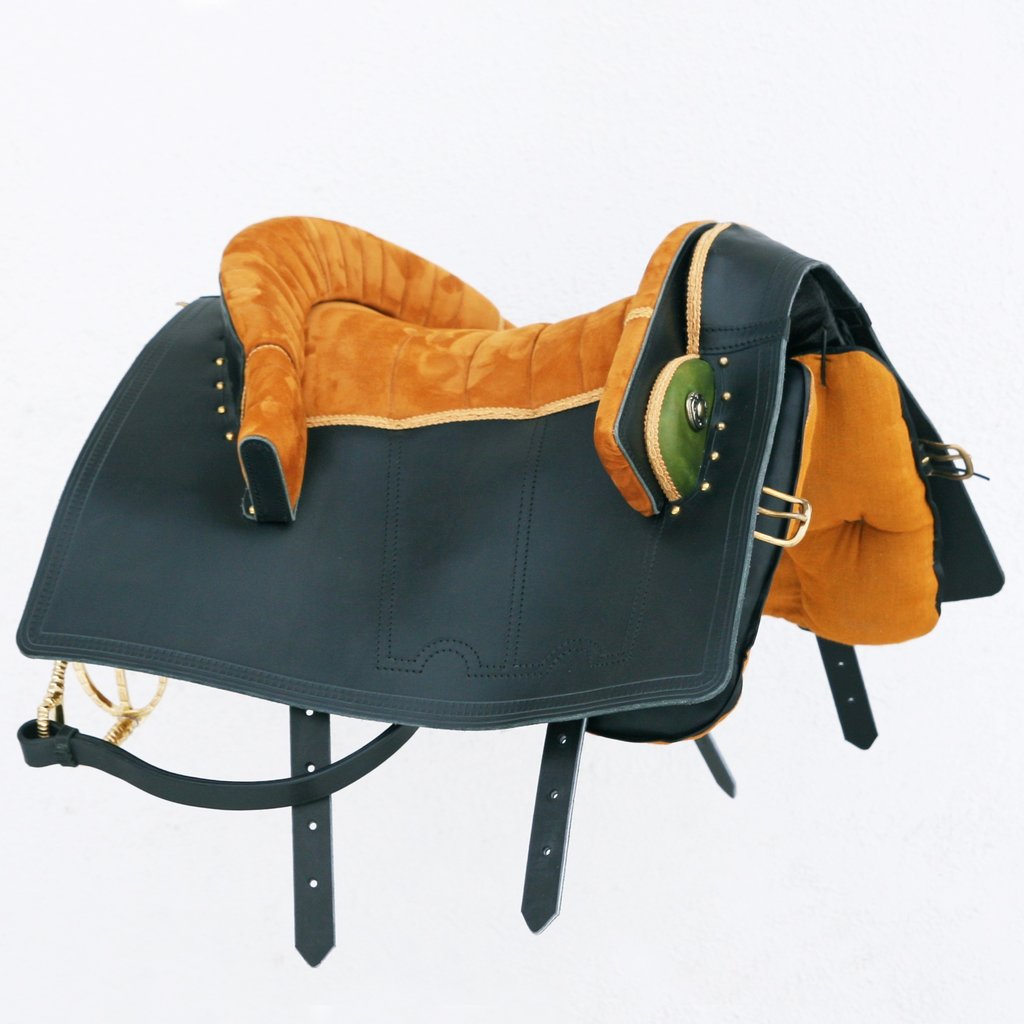
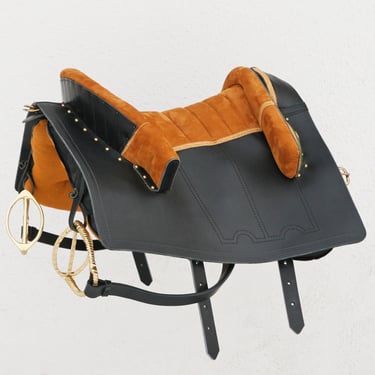
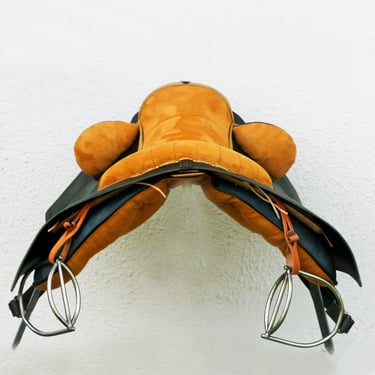
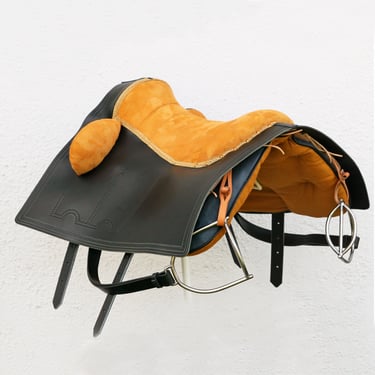
We present to you modern yet historically accurate saddle models, which we have named Real Baroque Saddles, created as the result of many years of experience in building this type of construction.
These saddles are equipped with the Adjustable Saddle System, which allows simple and smooth adjustment of the front arch angle. The uniqueness of our solution lies in the fact that changing the angle does not affect the gullet width, ensuring stable and safe fitting to the horse’s back. This is our legally protected innovation — you can read more about the Adjustable Saddle System HERE.
Real Baroque Saddles have been created with classical riding in mind, offering a wide range of possibilities for adjusting individual elements, as well as a high level of comfort for both rider and horse.
A technical and detailed description of our saddles’ features can be found below.
The advantages of our saddles include:
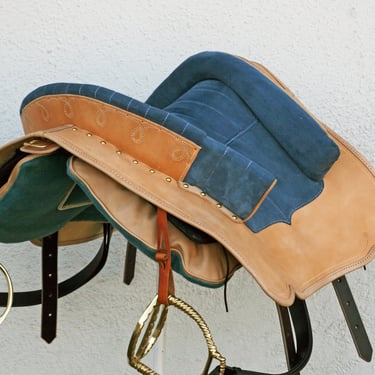
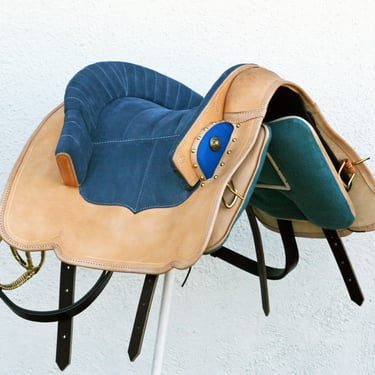
SADDLE "ROYALE"- 3200 Є
Basend on long pointed saddle tree and finish based on baroque paint of Sir Hamilton.
TECHNICAL DETAILS
We present to you a modern yet historically accurate saddle model, which we have named the Real Baroque Saddle. It is the result of 11 years of experience in building such constructions.
The Real Baroque Saddle was created with classical riding in mind. It offers a wide range of possibilities for adjusting individual elements as well as a high level of comfort for both rider and horse.
Our Real Baroque Saddles are based on preserved 18th century saddles from the 18th century and on the writings of historical riding masters such as François Robichon de la Guérinière, Gervase Markham, and William Cavendish. An analysis of historical solutions has shown us that the technology of that era was focused not only on functionality and biomechanics, but also on harmony of form and aesthetics.
ADJUSTABLE SADDLE GULLET SYSTEM
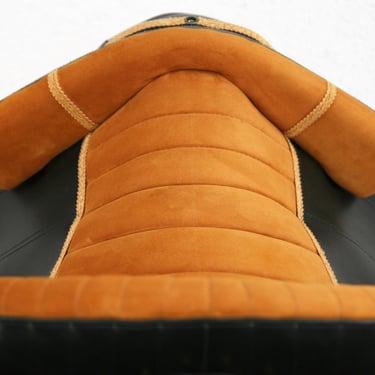
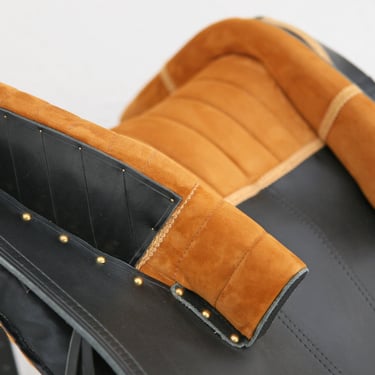
CURVED ELASTIC FRONT EDGES OF THE TREE
FLEXIBLE SADDLE TREE
NARROW TWIST
LARGE SADDLE TREE „POINTS”
ADJUSTABLE SIZE & USEFUL BLOCKS
ADJUSTABLE SEAT LEVEL
EASY TIED SOFT PANELS
CHANGEABLE PANEL’S CHANNEL
THIN SADDLE FLAPS
SAFETY STIRRUP BARS
USEFUL STIRRUP HOLDERS
REPLACEABLE GIRTH BILLETS
REAL BAROQUE FINISH
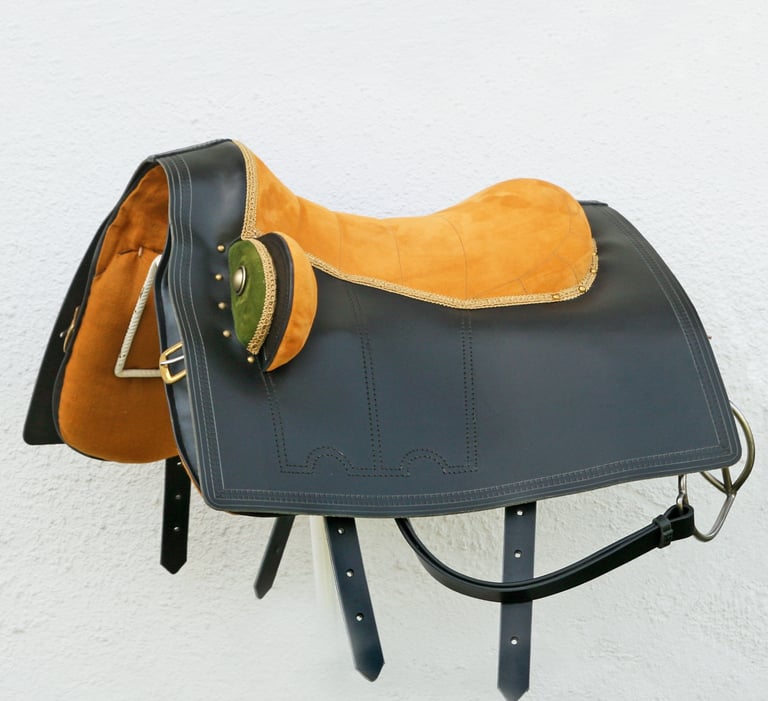
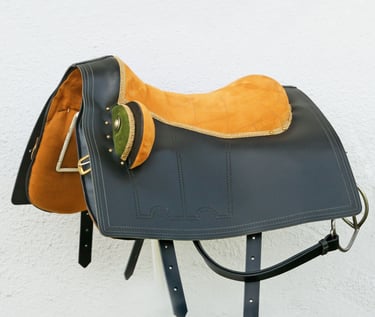
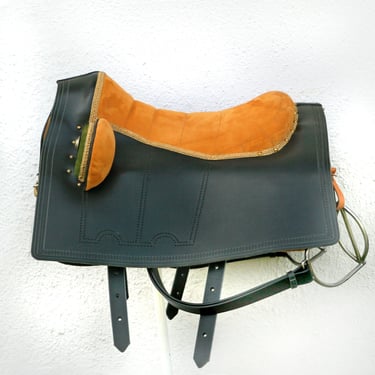
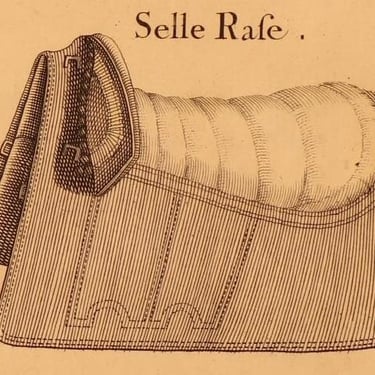
SADDLE "RASE"- 2800 Є
Basend on long pointed saddle tree and finish based on baroque paint of Sir Hamilton.
* The price includes the saddle, an adjustment Allen key, and one set of thin front blocks. Stirrups, stirrup straps, and girth are sold separately.
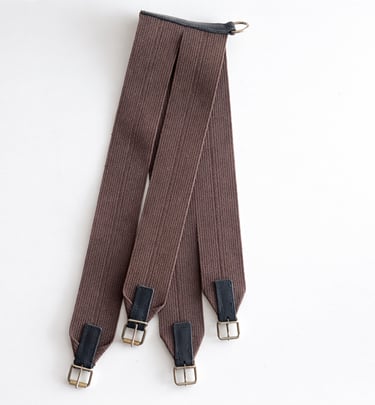
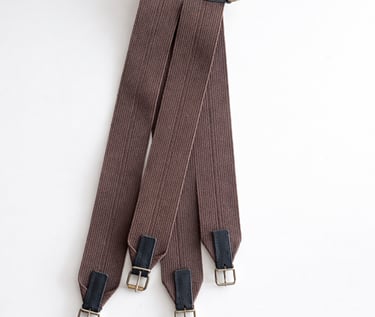
COTTON GIRTH — 80 Є
Dedicated girth made from thick cotton webbing. Length made to order. Available colours: brown, black.
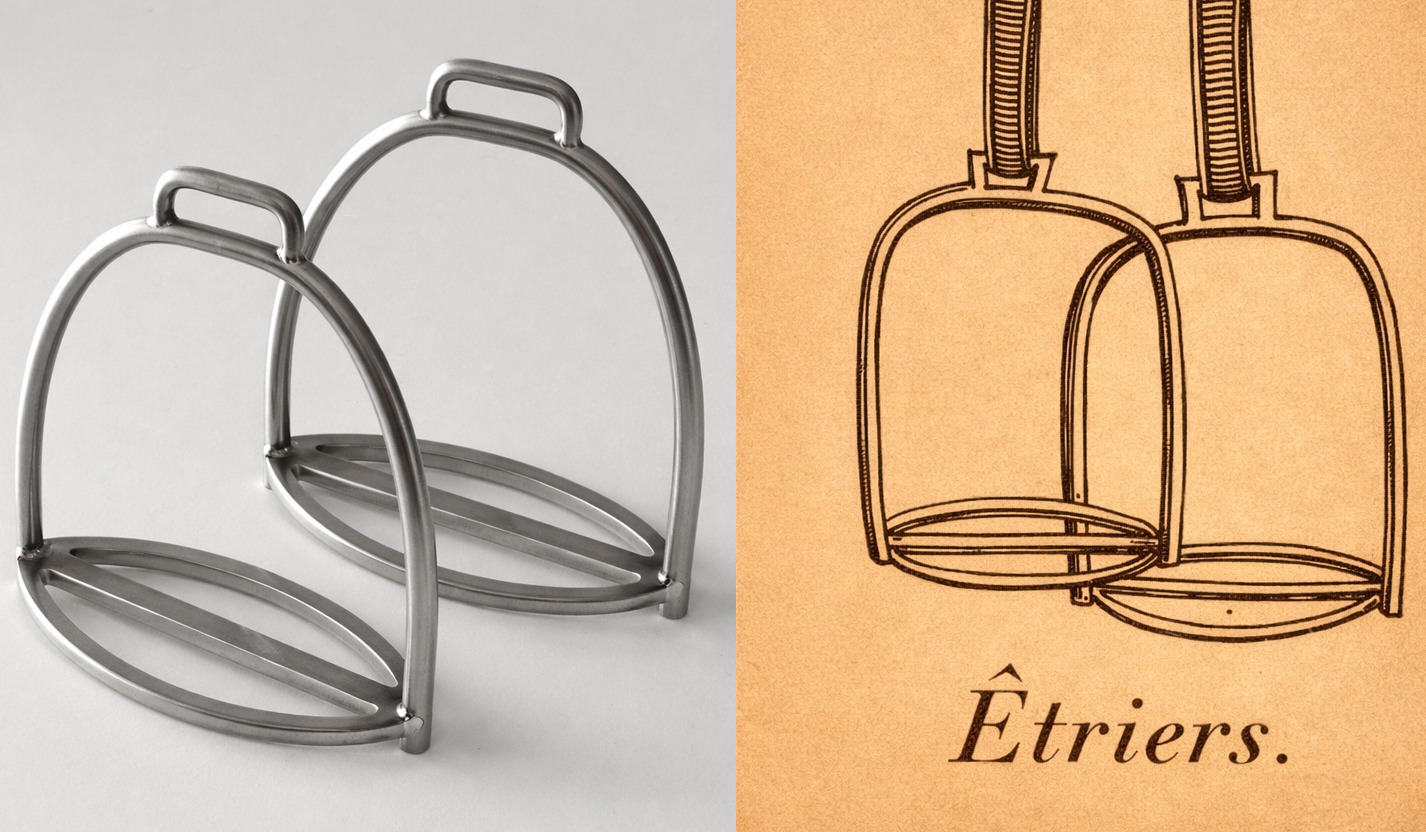
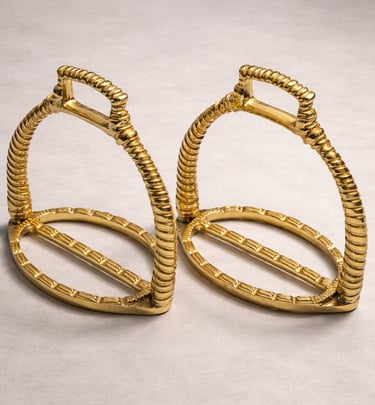
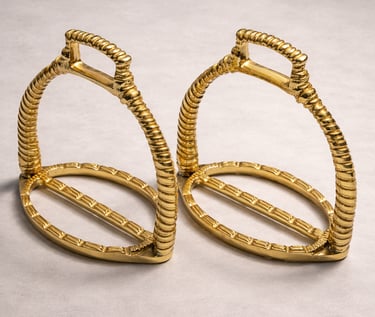
BAROQUE STIRRUPS— 95 Є
Baroque-style stirrups inspired by an illustration from François de la Guérinière, made from stainless steel.
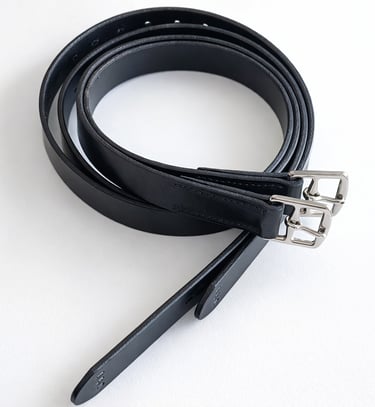
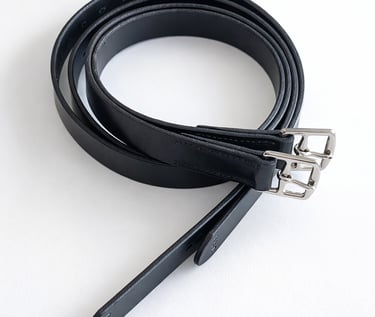
STIRRUP STRAPS — 45 Є
Made from natural leather. Available in various lengths.
SADDLE COVER— 80 Є
A dedicated saddle cover for “square-flap” saddles and finished with elastic edging.
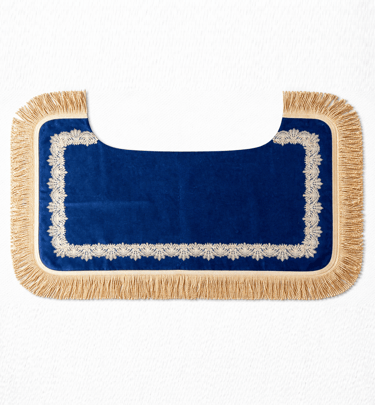
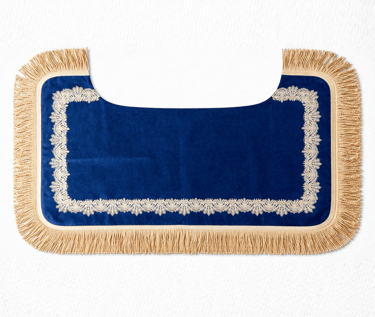
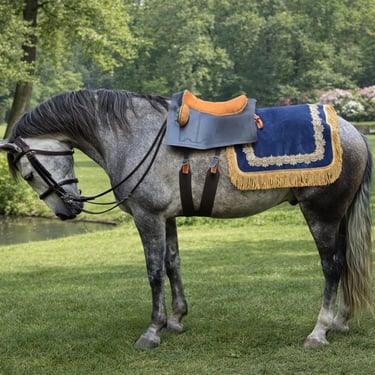
BAROQUE SHABRACK— 450 Є
Made from velvet on the outside — decorated with gold lace and fringes. Attached to the saddle with leather ties. Other colours available.
FRONT BLOCKS— 85 Є
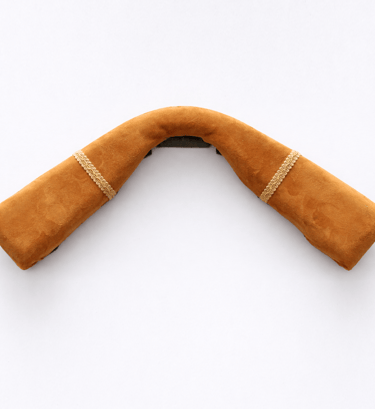
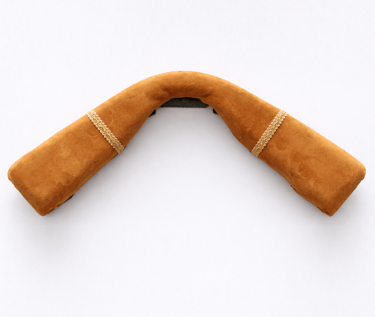
An additional interchangeable front block that is twice as thick as the one included with the saddle.
To place an order, please use the form on the right or send a message to sallad8@gmail.com.
You can also contact us via Facebook: Mrkonie
ADJUSTABLE SADDLE SYSTEM
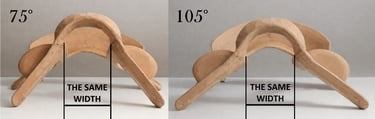
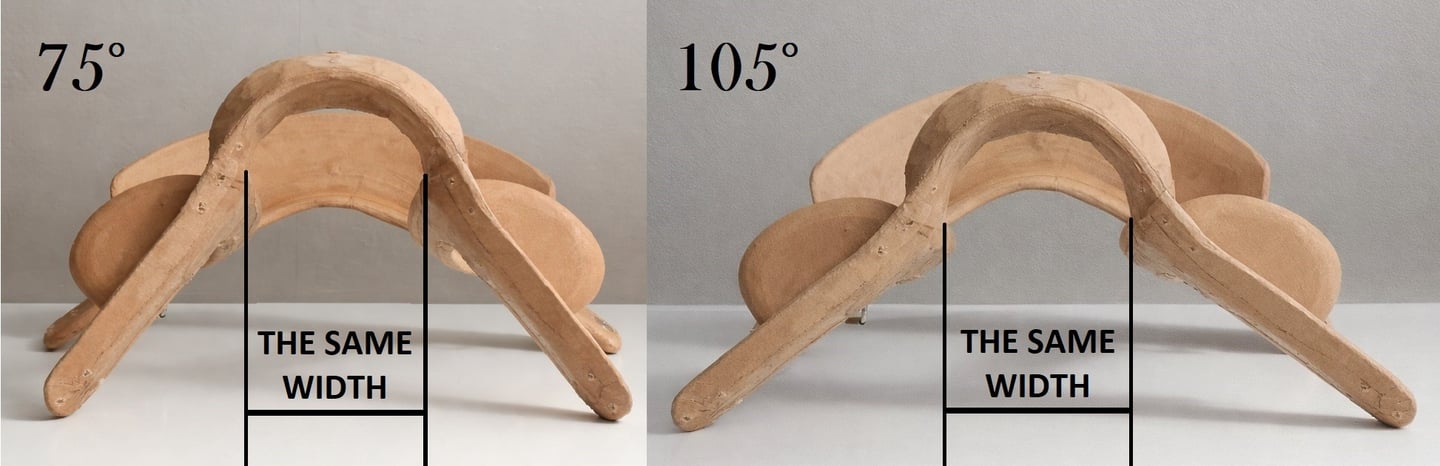
The greatest achievement is equipping this saddle model with the Adjustable Saddle System, which enables simple and smooth adjustment of the front arch (pommel) angle, allowing it to be fitted to a wide variety of horses. The uniqueness of our solution lies in the fact that changing the angle does not affect the width of the gullet. Only the angle of the front lateral parts of the tree is adjusted.
Thanks to this:
• with a narrow angle the gullet does not press against the withers,
• with a wide angle the gullet does not widen collapsing toward the withers.
The system offers a very wide adjustment range from 75° to 105°, allowing the saddle to be fitted to most types of horses — from massive cold-blooded ones to very narrow Arabians. Adjustment is made through smooth rotations using a single key inserted from the top. Adjustments can even be made while sitting on the horse, without removing the saddle.
To change the angle of the front:
1. Insert the key through the hole at the top slot,
2. rotate clockwise to widen the angle or counterclockwise to make it narrower.
3. When fitted — remove the key.
Do not use too much force or electric tools- it may damage the mechanism. During addjustment do not press the front of the saddle. If adjusting on the horse lean back a little to release the pressure from the front part of the saddle.
You can read more about the Adjustable Saddle System HERE.
LARGE TREE “POINTS”
Historical Baroque saddles had long points, which embraced the horse’s torso more effectively. This solution:
• improves the distribution of the rider’s weight,
• increases saddle stability,
• reduces the risk of the rear part of the saddle shifting during turns.
The points in the rear increase the weight-bearing surface allowing to achieve a relatively short saddle length. This helps reduce the risk of bridging (insufficient pressure distribution in the middle part of the saddle) and rocking (pressure being concentrated in the middle of the saddle).
As a result, together with the Adjustable Saddle System, the universality of the saddle increases and the fitting problems across different back types is reduces.
The tree is slightly flexible in one direction — across the horse’s back — which prevents the longer points from pressing into the horse’s back during its movement.
CURVED ELASTIC FRONT EDGES
Our tree is equipped with curved upward elastic edges in the front part which, combined with panels filled with natural wool, allow the horse’s shoulders greater freedom of movement. This solution supports the horse’s natural motion and reduces restriction in the front part of its back.
NARROW TWIST
As Guérinière described, a saddle should be narrower in the front of the seat so that the rider’s thighs can lie closer to the horse. Thanks to our Adjustable Saddle System, when the angle of the front arch is changed, the seat bars do not widen, and the twist remains consistently narrow. This allows to maintain close contact with the horse regardless of the selected angle.
NARROW TWIST
As Guérinière described, a saddle should be narrower in the front of the seat so that the rider’s thighs can lie closer to the horse. Thanks to our Adjustable Saddle System, when the angle of the front arch is changed, the seat bars do not widen, and the twist remains consistently narrow. This allows to maintain close contact with the horse regardless of the selected angle.
SEAT SIZE & USEFUL BLOCKS
We offer two tree sizes measured from the front to the rear arch: S1 – 36 cm andS2 – 40 cm.
Additionally, thanks to interchangeable front blocks with a thinner or thicker one, the seat size can be further adjusted, allowing the saddle to be customized to the rider’s build and preferences.
In Baroque saddles, the “bates” (blocks) — the front and rear thigh supports — played an important role in stabilizing the rider’s legs. According to François Robichon de la Guérinière, the rider’s position consisted of two mobile parts (torso and lower leg), and one immobile part (hips and thighs). The blocks served to stabilize the latter.
Today, many so-called “baroque” saddles have blocks positioned too far apart, preventing them from functioning correctly. In our saddles, we preserve the historically accurate operation of these elements.
Because the front blocks are easily interchangeable, this allows:
• individual adjustment of the space between the front and rear blocks to secure the rider’s thighs,
• adjustment of the seat size.
EASY-TIED SOFT PANELS
Historically, panels were made from fabric on the horse’s side and stuffed with wool. Guérinière emphasized the importance of softness — thick leathers stiffen under the influence of sweat.
Our panels follow the same principle: they are covered with soft natural leather on top and soft fabric underneath. As filling we use natural sheep’s wool, which compacts to the shape of the horse’s back, making fitting easier.
Advantages of our panels:
• softness that gives a true “pillow-like” feel,
• better grip on the horse’s back than smooth leather,
• the possibility to replace the fabric after years of use,
• easy panels removal and stuffing adjustment.
In the 18th century panels were not permanently attached but tied to the tree with leather laces. This allowed easy removal and adjustment of the filling. We have applied the same technical solution, and additionally introduced extra holes so that the panels can be re-laced into different positions to change the gullet width between them. The front and rear panels spacing may be adjusted independently — only at the front or only at the back.
The panels also feature cut-outs for the rider’s thighs, allowing the legs to lie closer to the horse.
ADJUSTABLE SEAT LEVEL
Our saddles allow correction of the seat level by adjusting the amount of wool filling inside the panels. Although the adjustment range is limited, it still offers useful possibilities. Because the panels are attached to the tree with leather laces, they can be removed and re-stuffed independently in the front or in the back.
THIN FLAPS
Our saddles have only one layer of leather between the rider’s leg and the horse, improving contact. Even in the 17th century, Gervase Markham recommended such a design.
Modern research confirms that rider stability improves when the number of layers is minimized — one layer of leather provides the optimal compromise between protecting the rider’s leg from buckles and straps, and maintaining close contact with the horse.
Additionally, the panels underneath the saddle are made only from a thin layer of soft leather and fabric, and feature cut-outs for the rider’s thighs — all to maximize contact with the horse.
SAFETY STIRRUP BARS
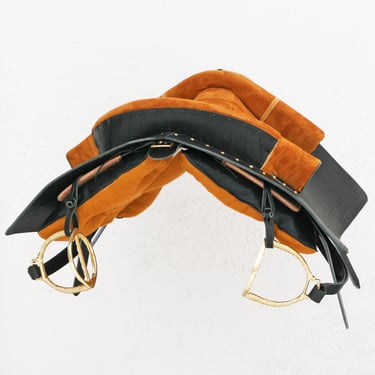
Instead of the historical closed stirrup frame, we use a hook stirrup bar, which in emergency situation allows the stirrup strap to release, increasing the rider’s safety.
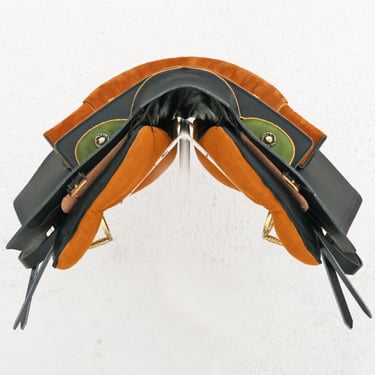
The hook stirrup bar is mounted on a movable metal hanger, so that it aligns naturally underneath the rider’s leg.
REPLACEABLE GIRTH BILLETS
The girth straps are positioned as widely as possible to improve saddle stability. They are mounted on metal frames, allowing easy replacement (strap width: 30 mm).
According to 18th-century technique the girth buckles are located under the saddle flaps. Which is why we make our girths adjusted to the indyvidual horse.
FLEXIBLE SADDLE TREE
Our tree is made from natural, properly prepared wood. We do not use synthetic materials.
The tree is reinforced with spring steel fittings and covered with canvas — in line with 18th-century technology. This allows controlled flexibility along the horse’s back and rigidity across it, meaning the tree does not collapse under the rider’s weight while still supporting the natural twisting motion of the horse’s back.
Thanks to this flexibility, the longer points do not restrict the horse’s movement.
USEFUL STIRRUP HOLDERS
Leather stirrup holders are mounted at the rear of the saddle in accordance with preserved examples and historical engravings — practical and simple in form. Because our holders are placed under the saddle flaps, they do not damage their leather surface.
REAL BAROQUE FINISH
The finish of our saddles is the result of in-depth study of preserved examples, iconography, and texts from the 17th–18th centuries, allowing us to present a saddle that is as historically accurate to that period as possible. Baroque aesthetics represent, for us, one of the most beautiful eras in the history of the saddlery.
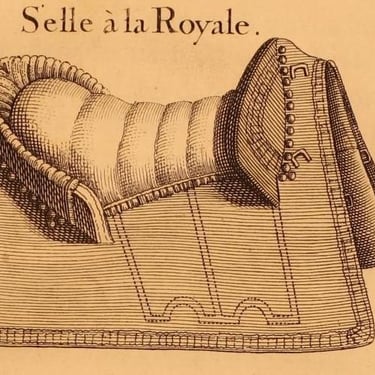
Below are the two saddle types we offer — Selle à la Royale and Selle Rase —originating from the works of the famous 18th-century riding master François Robichon de la Guérinière. Both models are equipped with the Adjustable Saddle System.
Optional features include:
• a grooved brass pommel knob to enhance the Baroque appearance,
• velvet finishing and decorative trims,
• the option without the “bates” (blocks),
• customization of nearly every saddle element, including colours of materials and details.